




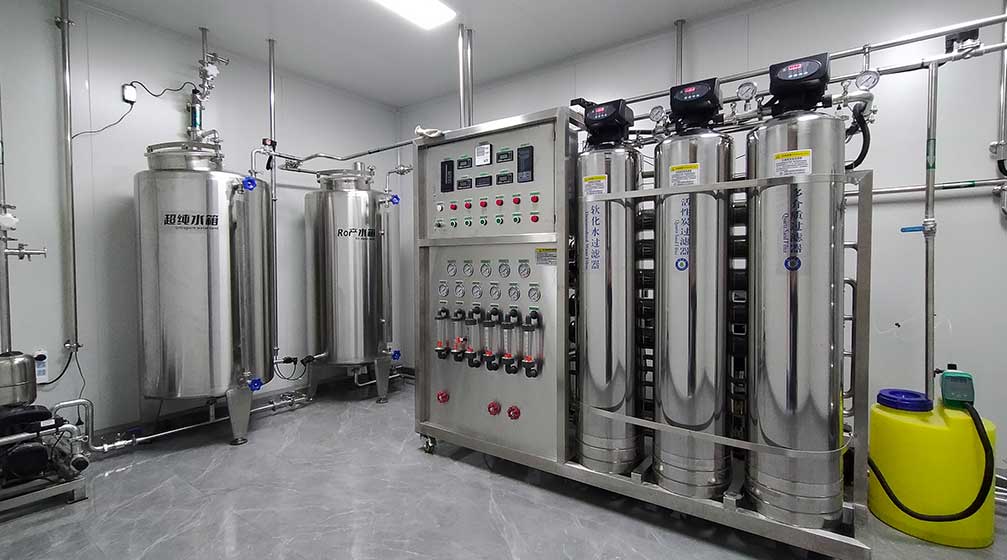
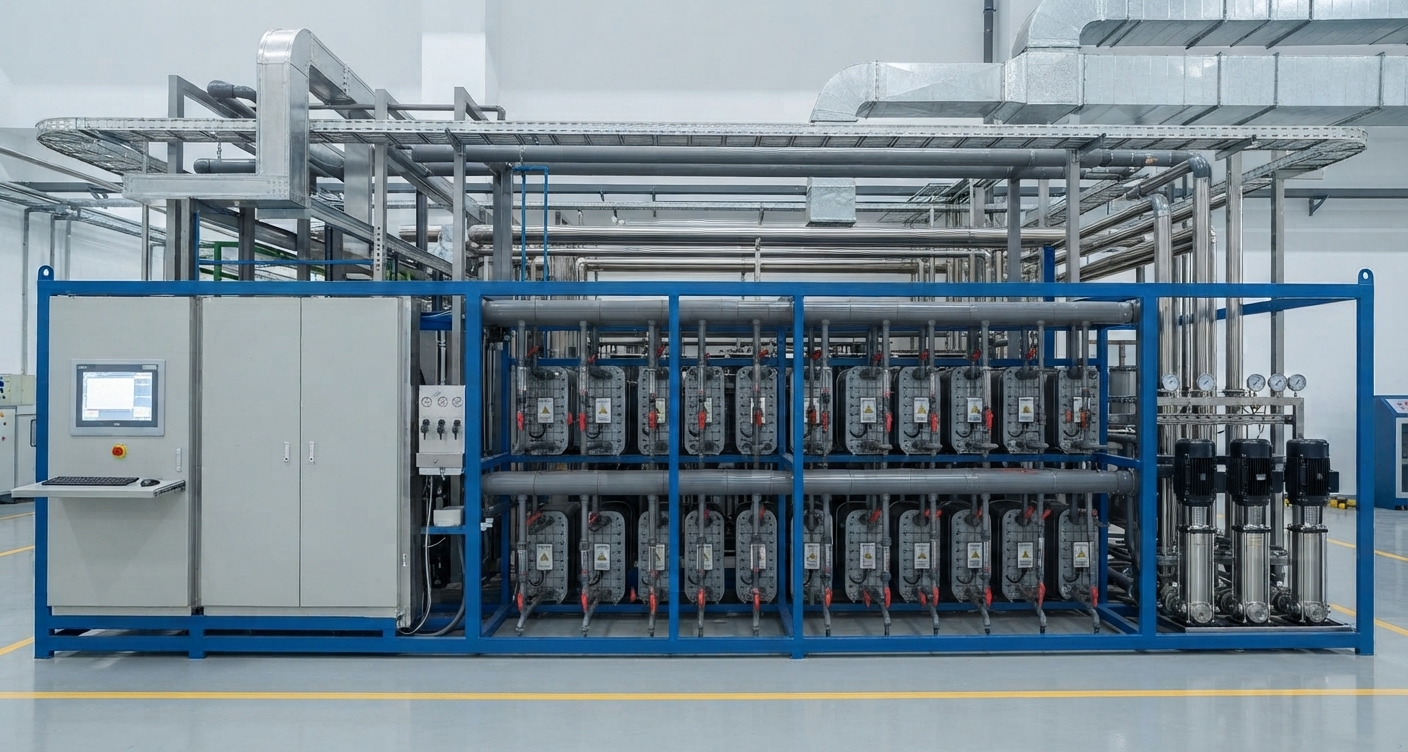
EDI Ultrapure Water Systems
Advanced continuous electrodeionization technology delivering consistent high-purity water for pharmaceutical, semiconductor, and laboratory applications with minimal chemical consumption.
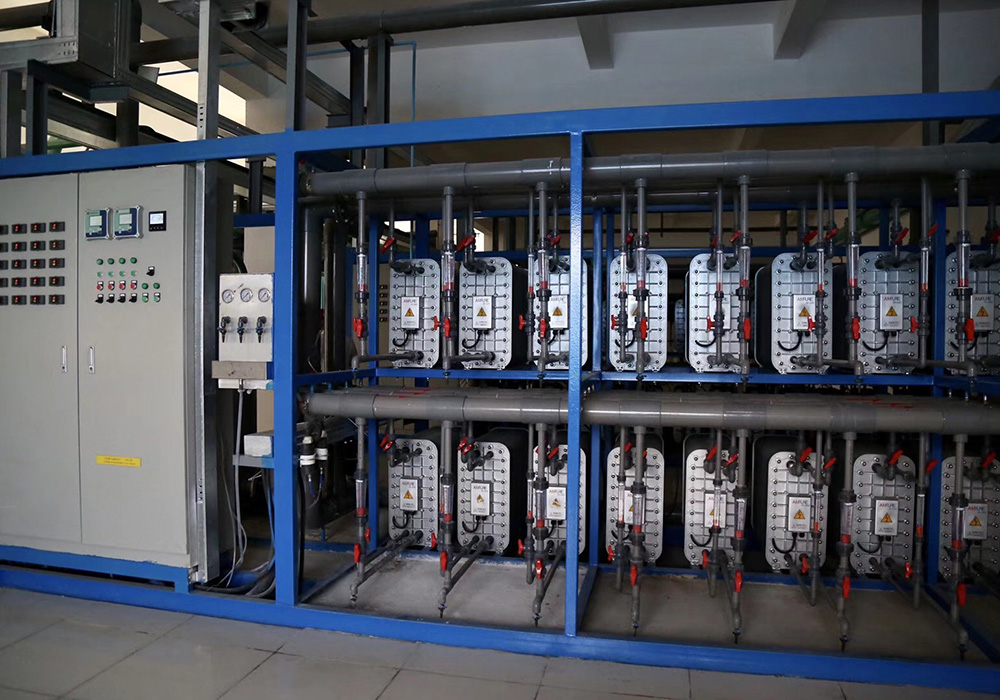
EDI (Electrodeionization) Working Principle
EDI combines ion exchange and electrodialysis to continuously produce high-purity water without requiring chemical regeneration.
- Ion Adsorption: Resins capture trace dissolved ions from RO permeate.
- Electrical Migration: A direct current (DC) electric field drives the trapped ions through selective membranes into the concentrate stream.
- Continuous Regeneration: The electric field splits water molecules into hydrogen ($H^+$) and hydroxyl ($OH^-$) ions, automatically and continuously regenerating the resin in real time.
- Key Benefit: Chemical-free, continuous operation yielding ultra-pure water (up to 18.2 MΩ·cm).
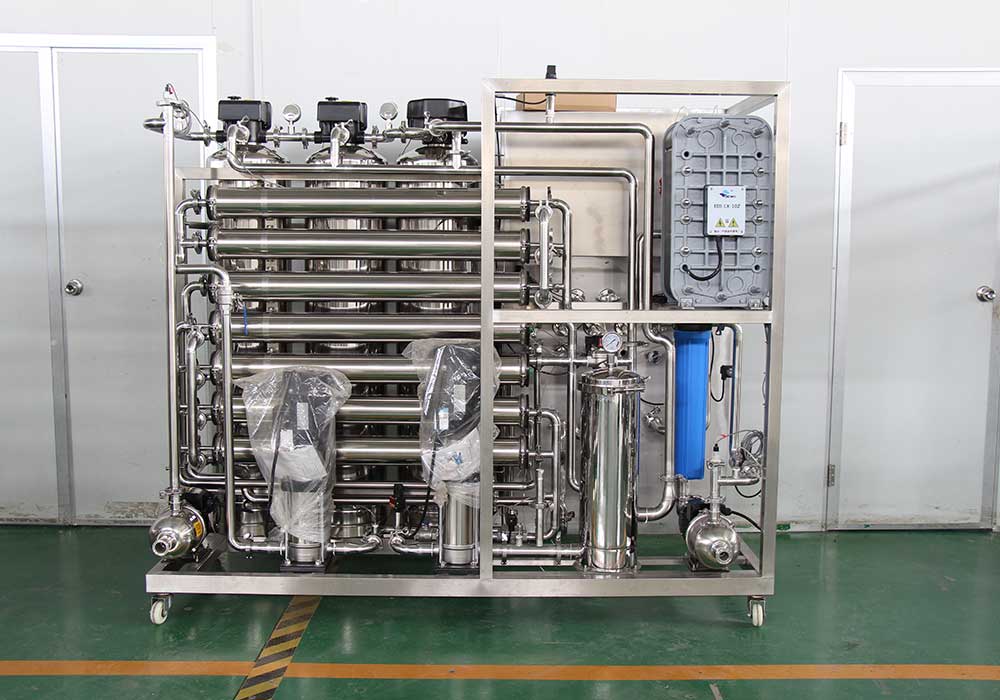
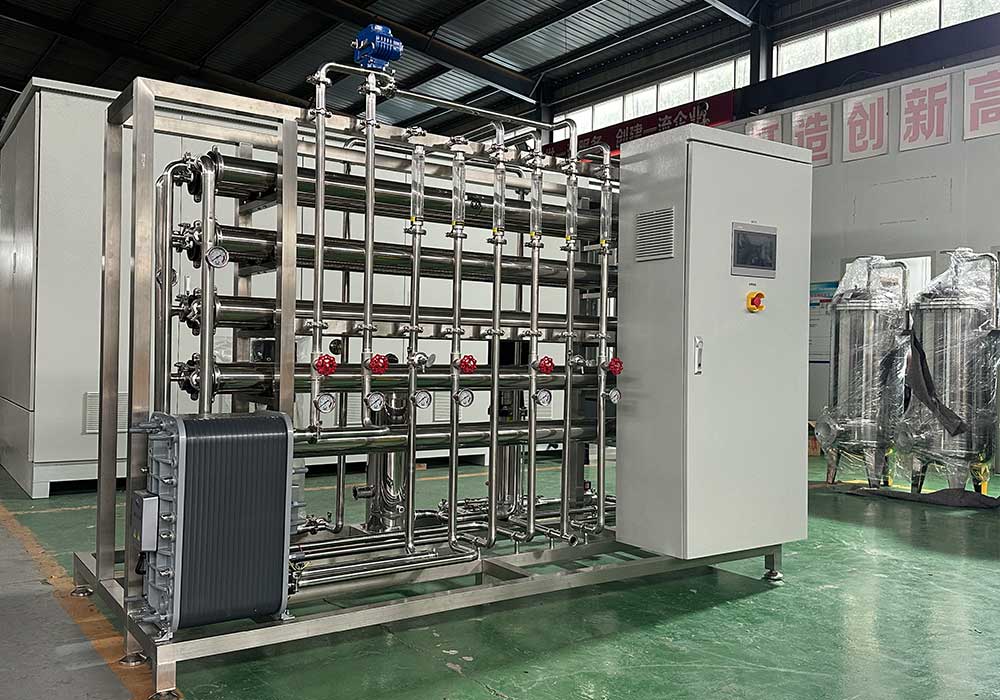
Product Classification

Frequently Asked Questions (FAQ)
We employ a “consultative design” approach. We align deeply with your technical team during the design phase, delivering PFDs and 3D layouts to ensure the system perfectly matches your specific process constraints.
We establish a project baseline during the “Solution Finalization” phase. If adjustments are needed after the baseline is locked, we conduct an engineering impact assessment and provide a supplemental agreement, ensuring full transparency in project timelines and costs.
We adhere to a “transparency-first” principle. We provide a Bill of Materials (BOM) specifying the brand and model of all core components during the design phase, prioritizing Tier-1 global brands to ensure peak performance and global serviceability.
We adhere to rigorous quality management systems (ISO9001). For export projects, we support manufacturing compliant with international standards such as CE, UL, and ASME to meet your specific regional regulatory requirements.
For custom systems, we execute rigorous Factory Acceptance Testing (FAT). Protocols are tailor-made for your unique requirements, and we invite you to witness critical test stages via remote video. A comprehensive test report is included in the shipment.
Lead times depend on project scale and complexity. We clearly define key milestones—manufacturing, FAT, and shipping—in the contract to ensure transparent scheduling and timely project progression.
We provide 24/7 remote support via video guidance and online diagnostics. Senior engineers are available for on-site installation and commissioning services upon request.
We provide a comprehensive list of consumables upon delivery and offer full-lifecycle support. We ensure the regular supply of spare parts to prevent operational downtime.